
Acid Alkaline Food Chart

Which foods are alkaline? Which neutral? Which acidic?
How can you balance the body's pH?
Our eating habits have dramatically changed from nutritious raw foods to highly processed foods very low in nutritional value - in fact our optimum cell function is at risk! Without the proper Acid Alkaline Balance of our body fluids we increase the risk of getting life-threatening or chronic diseases.
The key to regain the body's ideal blood and body pH is to create a Balance of Alkaline and Acid Forming Foods. However, because of unhealthy eating habits, most North-Americans have lower than neutral pH levels - but as our "normal" pH level is slightly alkaline, e.g. slightly above neutral (7.2 - 7.3), our intake of foods should also reflect this!
In this regard we suggest consuming at least 75-80% of Alkalizing Foods, like green vegetables, sprouts and soy products, and never more than 20-25% of Neutral and Acidifying Foods, such as meat, rolls, fast food etc. The reason for that? By eating alkaline foods our body's balance will be transformed from dangerously acidic to slightly alkaline!
Here are some simple strategies that may help to gradually balance your pH level:
Soy milk or almond milk instead of dairy products
Elimination of red meat and reduction of any chicken or turkey
Elimination of soft drinks, soda, coffee - alkaline water and alkaline green drinks instead
Wholewheat products instead of anything containing white flour
Big salads as a whole meal as often as possible, including tomatoes, zucchini, squash, cucumbers, almonds, avocados with pumpkin, sunflower, or sesame seeds
No processed, ready made or fast food at all
The table below helps to identify various foods' pH-level. We have divided our food chart for Alkaline and Acidic Food products into three categories: Foods you should eat in abundance; Foods you should eat moderately; and foods you should try to avoid.
Acid Alkaline Food Chart
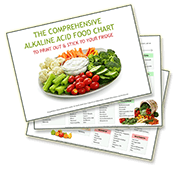
THE COMPREHENSIVE
ALKALINE ACID FOOD CHART
To Print Out & Stick to Your Fridge!
The best and most comprehensive Alkaline Acid Food List for direct download to your computer.
Price: US$3,75!
(The list is also included in our e-book bundle - see below).
The PDF list is available via PayPal. You can also pay with credit card without a PayPal account. After the transaction, please click "Return to merchant" so that you can download the PDF document immediately.
Please contact us if you encounter any problems downloading the ebook.
(Once you order you agree to our terms of use.)
The more alkaline-forming foods you add to your nutrition, the stronger will be the results. Should you not be able to completely avoid acidic foods, you should at least try to consume as less as possible of them, and instead put more green food and veggies on your plate. Remember that every little step to a more alkaline diet is an improvement to a healthier way of life.
Moreover, you can add green plants nutritional supplements to your diet, which can support you in attaining pH balance in a natural way. Such supplements were developed by Dr. Young, a microbiologist and nutritionist. Over many years he has researched the interrelations between acid wastes inside the body and the development of unhealthy conditions and disease.
His assignment is not only to promote a stronger awareness among people for a proper
Get Information about Symptoms of Acidosis
Get Information about The New Biology and pH Miracle by Dr. Young
Get Information about Alkaline Nutritional Supplements
Our Balance-pH-Diet
4in1 E-Book Bundle
You can purchase all our famous ebooks as a bundle, which means you can download all of our ebooks at once. Thus you receive all the information and resources you need for an optimal start with an alkaline diet with just one purchase. Perfect!